Posts

Dragging Drugs

The war on drugs campaign that began in 2016 awakened the Filipino people to further strengthen the fight against the use and abuse of drugs in the Philippines. In pursuing this, the Department of Education reinforces its National Drug Education Program in schools. This program is also in pursuant to Section 43 of Article IV of R.A. No. 9165 otherwise known as the “Comprehensive Dangerous Drugs Act of 2002”. This aims to unify all sectors of the society to work collaboratively to educate the young regarding the negative impacts of drugs.

Section 43. School Curricula – Instruction on drug abuse prevention and control shall be integrated in the elementary, secondary and tertiary curricula of all public and private schools.

Such instructions shall include:

  1. Adverse effects of the abuse and misuse of dangerous drugs on the person, the family, the school and the community.
  2. Preventive measures against drug abuse
  3. Health, socio-cultural, psychological, legal and economic dimensions and implications of the drug problem
  4. Steps to take when intervention on behalf of a drug dependent is needed, as well as the services available for the treatment and rehabilitation of drug dependents.
  5. Misconceptions about the use of dangerous drugs

SOCIAL


“The consequences of drug abuse are vast and varied and affect people of all ages.”
Photo Source :
http://www.ptsdjournal.com/posts/11-negative-effects-of-lack-of-socializing/


MEDICAL

CRIMINAL JUSTICE

ECONOMIC

FIVE COMPONENTS:

  1. Curriculum and instruction
  2. Co-curricular and ancillary services
  3. Teacher and staff development
  4. Parent education and community outreach
  5. Research, monitoring and evaluation

ACTIVITIES TO STRENGTHEN THE IMPLEMENTATION OF THE NATIONAL DRUG EDUCATION PROGRAM (NDEP)

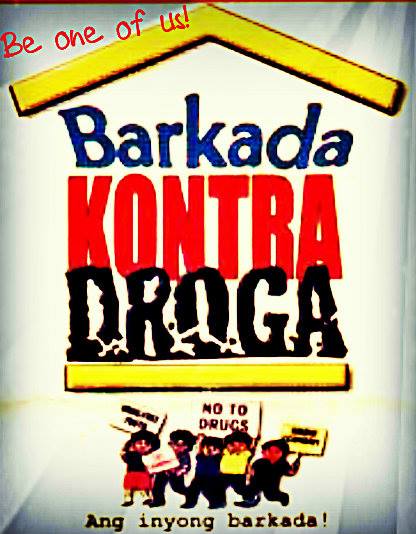
  1. Establishing Barkada-kontra-droga chapters in school
    • This idea was brought about the youth’s desire to have a youth core group who shall serve as role models to whom they can emulate.
2. Intensifying anti-drug abuse information campaigns

3. Supporting the activities planned by the designated regional and schools division NDEP coordinators

4. Mobilizing all scout leaders to integrate drug abuse prevention in the training of scouts utilizing the Drug Abuse Prevention Integrated in Scouting Kit (DISK)

5. Involving Parent-teacher-community associations and pupil/student organizations in drug abuse prevention activities

6. Allocating funds for the replication of existing modules and teaching aides, and/or development of other supplementary instructional materials.

7. Collaborating closely with local government units, other government units and nongovernmental organizations at the local level. 

ENDING THIRST THROUGH THE SCHOOL MILK PROJECT

“Hunger not only digs holes in the stomach, but also in the mind.”

Photo Source : https://www.bing.com/images/search?view=detailV2&ccid=Way9JSwi&id=E9ABD1A60B48FD1F08F03FF79D356CCEFDAB0A6F&thid=OIP.Way9JSwifeXTb8vkhlK2owHaE7&mediaurl=https%3A%2F%2Fendpoint895270.azureedge.net%2Fstatic%2Fmediabank%2Fphilippines-school-milk-2015.jpg&exph=950&expw=1426&q=school+milk+project+in+philippines&simid=608023044061135664&selectedindex=0&ajaxhist=0&vt=0

Child hunger is an alarming condition among school children that slows brain development and retards the formation of teeth and bones. It also causes lack of concentration and weakness, making children inattentive and inactive in class. According to studies made by the DECS Nutrition Office, children who skip breakfast tend to develop child hunger compared to those who takes time to finish their cup of milk and pandesal.Studies also show that due to the increasing pace of industrialization, parents today opt to give their children junk food that are low in nutrition.

Milk is one of the healthiest drinks we can give for children, it is also the most significant fuel the body needs and will ensure that school children have a balanced diet. The reason why this beverage is one of the better healthy drinks for a child is that it has a lot of nutrients. It has calcium which is important for bone and teeth development. It has protein which is good for cell and muscle development. Dairy free milk also contains good fat that help keep arteries clean and healthy. Milk also contains certain vitamins that are essential for child development. Vitamin A is found in milk which helps in eye development. At a young age Calcium is more readily absorbed by a young child’s body from milk than other sources. Milk also contains vitamin B which helps regulate the nervous system and convert food into energy.

But in the Philippines, making sure children have healthy drinks is not always at the top of most parents lists. That’s why the School Milk Project of DepEd under the School health and nutrition program was established which aims tosupplement the diet of undernourished school children all Grade I pupils in selected schools. 

The program is part of the National Feeding Program Community-Based-Dairy Project and the “Gulayan sa Barangay” Program of the Department of Agriculture and its partner agencies in the hope of reducing malnutrition cases among school-age children.

Under the program, free chocolate-flavored milk in non-commercial packs will be given to Grade 1 students of selected schools during recess time. According to research, milk becomes effective only after 120 days. Thus, the pupils will be given free milk every school day in a span of 24 weeks.


BREAKFAST FEEDING PROGRAM: A FIGHT FOR HUNGER

I think we all know that breakfast is the most important meal of the day. May it be for reason of losing weight or simply to be healthy. It should be a regular habit since it has a number of benefits, ranging from providing essential nutrients to make sure that energy levels are up througout the day, and it also leads to better memory and concentration. 

            Those are the reasons why the breakfast feeding program by DepEd was established for the children of the Philippines. Their aim is to improve the active learning capabilities of children through the promotion of breakfast. This will help in the development of the overall health of grade 1 students in public schools. 

Their meal includes NOODLESthat contains the following supplements:

  • 300 kilo calories
  • 10 grams of protein
  • 800 IU beta carotene
  • Fortified with iodine

This program is in  fact, House Bill No. 364 that was implemented back in July, 2013. Its main objective is to provide public elementary school students with free breakfast. They took into consideration that many children attending public schools are living in poor households and are more susceptible to malnutrition or are undernourished. 

According to the Department of Education (DepEd), in the years 2012-2013 more than half a million Filipino children attending school were severly WASTED or in other words, underweight. The Philippines is actually ranked number 10 in the world with the most wasted children by UNICEF. 

In circumstances like those, it affects a variety of factors such as their physical and social health and most especially their academic performance that could have a long term effect on their health as adults. 

This is also related to how food should not be taken for granted or wasted. Not everyone in the world are able to get a taste of a healthy breakfast or eat any meal at the least. Know how to appreciate what you have before time forces you to appreciate what you had.

Photo Source : https://i0.wp.com/www.subicwater.com.ph/wp-content/uploads/2018/01/Feeding-at-OCABIS.jpg?resize=768%2C512